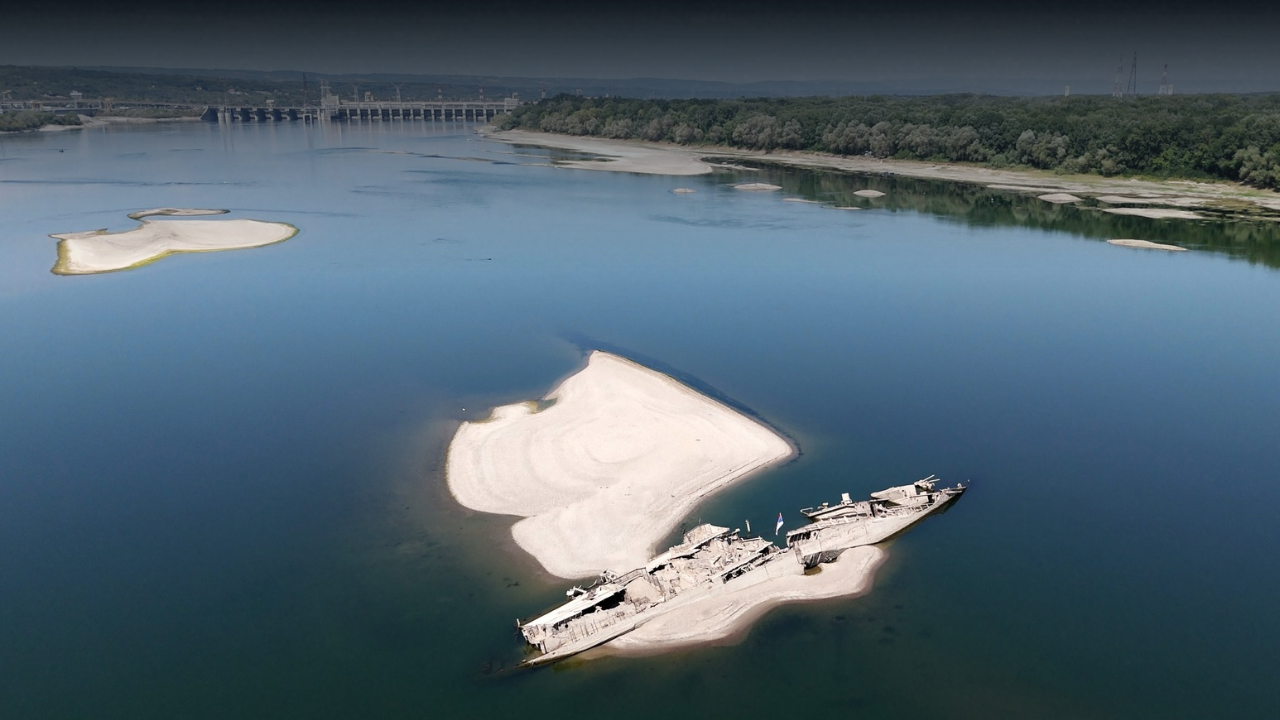
Along the Danube near Prahovo lie the remains of dozens of vessels sunk during the Second World War. Warships, transport ships, tugboats and barges once belonged to the German Danube Flotilla, whose retreat ended with the scuttling of its own vessels in September 1944.


After Romania changed sides and joined the Allies, the German flotilla's route to the Black Sea was cut off. Its attempt to retreat upstream through the Iron Gates turned into a struggle to pass through the gorge. Trapped on the Danube, German commanders decided to sink their ships to prevent them from falling into enemy hands and to block the waterway.


After the war, some vessels were salvaged and put back into use, while others remained on the riverbed. For decades, the Danube covered them with sediment. During periods of low water, their rusted hulls emerge once again.


The ship graveyard near Prahovo is a remarkable testimony to wartime events on the Danube. It is also a dangerous legacy of the past, as some of the wrecks still contain unexploded ammunition and explosive devices.
See more


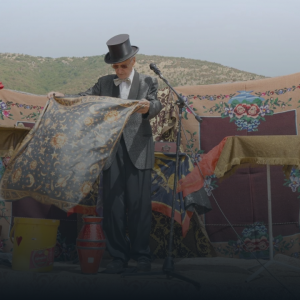
Paris Has Only One Flaw: It Doesn't Have the Prženijada Festival in Ošljane!

Prženijada in Ošljane brings together lovers of traditional food and contestants competing in the preparation of pržen. Discover a local food festival that celebrates culinary...

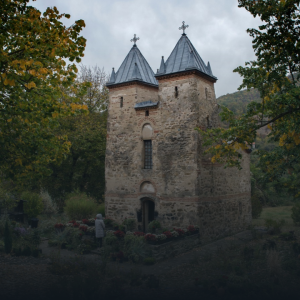
The Church in Donja Kamenica

Built in the first half of the 14th century, the Church in Donja Kamenica stands out for its unusual architecture and rich medieval frescoes. Its...

The Old Rajac Cemetery: Symbols Carved in Stone

Located near the Rajac Wine Cellars, the Old Rajac Cemetery is known for its unusual stone tombstones and decorative motifs that preserve traces of past...

The Danube Between Empires: From Roman Legions to Ottoman Ramparts

The Roman fort of Diana, Trajan’s Tablet and the Ottoman fortress of Fetislam bear witness to centuries of struggles for control over the Danube and...

Three Churches in the Shadow of Rtanj

At the foot of Mount Rtanj stand Lapušnja, Lozica and Krepičevac – three medieval churches preserving different traces of the past, from monumental architecture and...

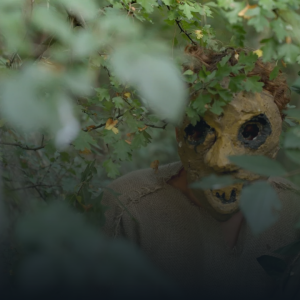
Mythical Beings of Eastern Serbia: Muma Paduri, Fairies and Todorci

Folk traditions of Eastern Serbia tell of beings believed to inhabit forests and places beyond the everyday human world. Muma Paduri, fairies and Todorci represent...

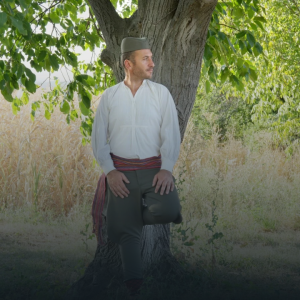
Torlak Poetry: “There’s No Translation for My Jeknja!”

Slađan Ilić, a poet from Trgovište near Knjaževac, writes poetry in the Torlak dialect. Through humour, verse and local expressions, his work preserves the linguistic...

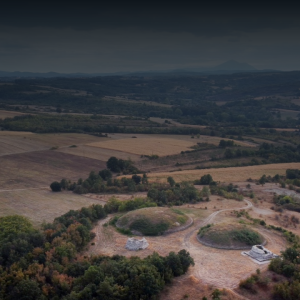
Magura: Where Roman Emperors Were Deified

The hill of Magura, overlooking Felix Romuliana, preserves traces of the Roman ritual of apotheosis – the deification of Emperor Galerius and his mother Romula....

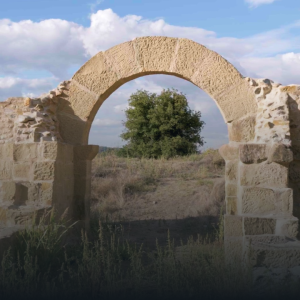
Timacum Minus: Traces of a Roman World on Timok river

Near Knjaževac, the archaeological site of Timacum Minus was home to a Roman military fort, a mining centre and a civilian settlement. Archaeological finds reveal...
Ministarstvo turizma i omladine
EU za tebe
Nemačka saradnja
GIZ
Zaječarska inicijativa
The Magic of the East website does not reflect the views of the European Union, the Government of the Federal Republic of Germany and the German Organization for International Cooperation (GIZ). The Zaječar Initiative is solely responsible for its content.
By using this site, you acknowledge that you have read, understand and accept our Privacy Policy and Terms of Use.
OK